Monday, March 5, 2012

Productivity in Las Vegas? You bet! (pun intended)


What do education, published research results, networking and David Feherty have in common? You probably answered "nothing", so let me give you the answer. All four were prevalent in Las Vegas this past week at the 2012 GCSAA Education Conference and Golf Industry Show.

Anthracnose updates
This event is held each year in varying cities and is attended by golf course superintendents, owners, builders, architects and equipment/product manufactures and distributors from around the world. Without a doubt, it is one of my favorite weeks of the year as it allows me to become exposed to new technologies, research that is being conducted as well as reconnect with fellow peers from throughout the world that I have developed friendships with.


The Business of Golf

Whenever I take classes, I am constantly reminded of how much my profession has changed over the years, but that is a topic for another day. This year's classes that I registered for included Best Management Practices for Anthracnose and its genetic history, The Business of Golf, Advanced Excel for Budgeting, Using Social Media for Communication as well as a few others.


A very small portion of the Trade Show floor
Of course, there is also the Trade Show which takes a couple of days in itself to get around if you have a lot of items to review and/or purchase.  It is literally miles of aisles worth of products and equipment all related to managing turf in some capacity.  It makes for a long couple of days and some very sore feet, but it is also a good opportunity to speak directly with manufactures as opposed to the distributors.


One of the highlights of the week was the Opening Session Keynote Speaker, David Feherty.  If you have seen or heard him on television, I can assure you that he's as engaging as you would think and even more "colorful" than you can imagine.  He took the stage at 8:15 am and had 45 min to talk.  By the time he was done with stories pertaining to his life, american citizenship, the golf industry and his extraordinary support for our military, it was about 9:30 am.  Truly an amazing individual that I could have listened to all day. I am really hoping that the entire video is released at some point so you can see it.  In the meantime, a brief interview and some of the highlights are in the 10 min. video below.


David Feherty from GCSAA TV on Vimeo.

It was a fantastic week, and this trip never fails to re-energize me and get me ready for the season. Yes, I was able to confirm how bad of a poker player I really am so there shouldn't be any concern that I will be leaving to join the World Poker Tour. It is, however, safe to say that I am officially ready for spring so, keep an eye out for new posts on everything that is happening on your golf course.


Monday, February 20, 2012

Evaluation and Reflection

Winter isn't solely a time for working on equipment, tree removal and planning our agronomic program for the upcoming season, it's also a time for evaluation and reflection. Evaluation in the Grounds Department comes in many forms.  Not only are the employees and department evaluated, but the golf course is evaluated as well. From pesticide and fertilizer applications to frequency of rolling, topdressing rates and aerification plans, all are reviewed to ensure that expectations are met or hopefully exceeded for the least amount of expense. 

Most years, reflection seems to fall into a similar category as evaluation.  I always reflect on my decisions from the previous season and try to make an honest assessment of where I can improve to make our operation better with the ultimate goal of continuing to improve the golf course.  This year, however, with the flurry of activity surrounding the construction of the cell tower and the expansion of the highway along our south border, I found myself reflecting on several of the accomplishments that the golf course has had in recent past. 

This past week marked my six year anniversary here at Elcona, so I thought I would reflect back over a period of time that I am familiar with: the last six years. Below are just some of the accomplishments that the golf course has seen over the last six years.  Each one of these should be a source of pride for you as members as they show a level of commitment toward improvement and updating that many clubs are not currently able to participate in. I know that my staff and I are very proud of these projects and are very gracious for the support that you give us.

 Please click on photos for larger view.

Became fullly certified in the Audubon  
Cooperative Sanctuary Program
Completion of the Arthur Hills Master Plan
using our own labor and materials  


Complete renovation of the irrigation system
Renovation of #18 green with Arthur Hills


In-house renovation of #12 fairway bunker to
improve playability
In-house construction of the terrace on the
west side of the clubhouse


        Removal of hundreds of trees to improve turf health and
         eliminate overcrowding
I hope you enjoyed the brief trip back in time.  For me, I am now done reflecting and have turned my attention to the golf season that will be here before we know it. Stay tuned for future blog updates concerning the opening of the golf course for the season and course conditions.

Wednesday, January 25, 2012

Mid-Winter Update

At this stage of the winter, there really isn't much to update other than that there hasn't been much of a winter, at least as far as very cold temperatures and snowfall is concerned.  We, the grounds department, have been very busy finishing our planned tree work, rebuilding equipment, refurbishing course supplies and putting our agronomic plans together for the upcoming season. Greg Stump and I are working on a plan to continue promoting our certification with the Audubon Society and hope to have some big news to announce in the spring. In my opinion, it could actually be argued that the winter is the most important time of the year for us because it lays the foundation for what we hope will be a very successful season.

Some other quick updates on what else has been happening:

The construction of the cell tower continues to move forward.  A completion date has not been determined, but, from the looks of things, it isn't too far away.


Fencing is now around the lease space


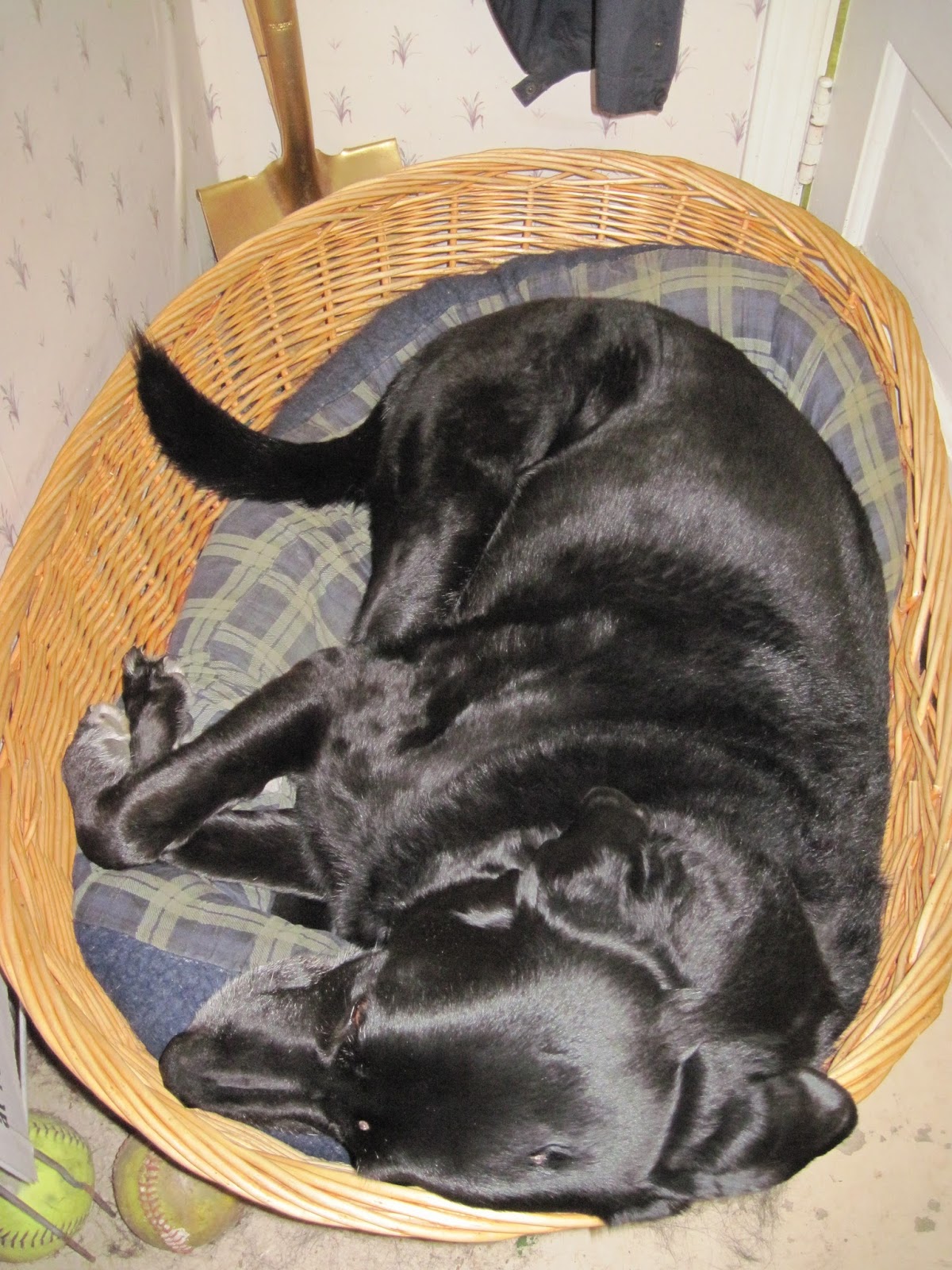
Some of you have asked how Mulligan is doing.  Rest assured, he has the shop protected from any unwanted intruders.  That is if he feels like getting up.


One last note:  For those of you that like to come out and cross-country ski when the snow is on the ground, we would prefer that you stick to the Audubon trails on the eastern part of the property.  Trail maps are available in the Main Office.  If you feel the need to ski on the course, PLEASE stay off of all greens, tees and fairways.  This will lessen the potential for damage to our fine turf areas.  Thank you.

That's it for now.  Keep checking back for more updates and have a great rest of the winter.
(FYI: Long term forecasts are  predicting a big drop in temperatures and an increase in precipitation, so we will continue to watch closely).

Monday, January 9, 2012

It Was Only a Matter of Time


Ash tree by #1 tee
If you have kept up to date with Elcona's monthly newsletter, it should not come as a surprise that a majority of our Ash trees are now showing signs of poor health as a result of the Emerald Ash Borer.  For many golf courses and homeowners throughout the Midwest, this spells disaster.  Fortunately for us, we do not have a significant number of Ash trees on our property and the ones that we do have, are not vital to the layout of a particular hole.

Click for larger view
Emerald ash borer (Agrilus planipennis) is an exotic, invasive woodboring insect that infests and kills native North American ash trees (Fraxinus spp.), both in forests and landscape plantings. Just like chestnut blight and Dutch elm disease before it, EAB is capable of eliminating an entire tree species from forests and cities throughout the land. This makes it one of the most serious environmental threats now facing North American forests.

Emerald ash borer was unknown in North America until June 2002, when it was discovered killing ash trees in southeast Michigan and neighboring Windsor, Ontario. It was probably imported into Michigan via infested ash crating or pallets at least 15–20 years ago. Since its accidental importation, EAB has infested and killed millions of trees in southeast Michigan, northern Indiana and northwest Ohio.

Adults emerge from late May through early August, with emergence peaking in early July. As adults emerge, they leave small, distinctly D-shaped exit holes (see photos) in the trunk and main branches, which is a sure sign of infestation. EAB larvae are white with a long (about one inch when mature) narrow, segmented abdomen that is also flattened, which gives them the appearance of small tapeworms. 

D-shaped exit hole
Adults are elongate, half inch-long beetles with striking, metallic green coloration. Females produce about 50 to 100 eggs, which are laid individually on the bark surface or within bark cracks and crevices. Observations indicate that higher branches and upper portions of the trunk are colonized initially, making it difficult to detect early infestations.As larvae hatch, they tunnel into the tree, where they feed through the summer and early fall on the phloem and outer sapwood, excavating S-shaped, serpentine galleries just under the bark. The larva is the damaging stage, girdling the tree as it tunnels under the bark where it feeds primarily on phloem and xylem tissue. This disrupts the flow of carbohydrates and water between the canopy and roots, which results in canopy thinning, branch dieback, and finally tree death, typically within two to four years of initial infestation.


The end result of  Emerald Ash Borer damage.

All photos were taken of Ash trees on Elcona's property.  Many of the facts in this post came from a fact sheet published by Ohio State University.  A link to the sheet is below: